

Why Choose Handmade Southern Heritage Items
Table of Contents
- The Personal Meaning Behind Handmade Southern Heritage Items
- Authenticity and Craftsmanship: What Sets Handmade Apart
- How to Evaluate Handmade Clothing and Heritage Apparel
- Handmade vs Mass-Produced Apparel: Quality and Durability
- Selecting Quality Southern Apparel for Your Collection
- Handmade Heritage Gifts: Supporting Artisans and Preserving Tradition
- Why Fair Pricing and Authenticity Matter
- Frequently Asked Questions
Last Updated: October 12, 2026
The Personal Meaning Behind Handmade Southern Heritage Items
When you hold a handmade Southern heritage item, you're connecting with generations of tradition, craftsmanship, and cultural identity that mass-produced goods cannot replicate. At Old Resaca Mercantile, choosing handmade southern heritage items means choosing authenticity and a tangible link to your roots.
Handmade goods carry stories. Each stitch, embroidered detail, and chosen material reflects the maker's intention and skill. Unlike factory-produced items churned out by the thousands, handmade southern heritage pieces are created with deliberate care you can feel when you own them.
The personal meaning runs deeper than sentiment. According to research on consumer psychology and emotional attachment, people form stronger connections to items they perceive as unique and intentionally crafted.
Authenticity and Craftsmanship: What Sets Handmade Apart
Most articles about handmade goods stop at vague praise for 'artisan skill.' What makes Southern heritage items distinct is specific regional craft traditions, each with its own materials, tools, and techniques passed down for generations. Knowing those traditions is how you tell authentic craftsmanship from mass-produced items wearing a Southern label.
The Southern craft traditions behind heritage items
- Quilting. Southern quilting includes appliqué, piecework, and strip quilting, with regional patterns like 'Log Cabin,' 'Bear Paw,' and 'Sunbonnet Sue.' Appalachian and Piedmont communities passed patterns down through families, and the quilting bee remains a living tradition in parts of the South.
- Pottery. The South has one of the country's oldest continuous pottery traditions. Edgefield, South Carolina, and the Catawba Valley of North Carolina are known for alkaline-glazed stoneware fired in wood-burning groundhog kilns, with face jugs and storage crocks as signature forms.
- Basketry. Gullah/Geechee sweetgrass basket weaving in the Lowcountry of South Carolina and Georgia uses coiled sweetgrass, palmetto, and pine needles, a West African-rooted technique practiced in the region for centuries.
- Textiles and weaving. Southern coverlets, hand-woven cotton, and homespun cloth reflect the region's agricultural history. Natural dyes from indigo, walnut, and pokeberry were common in older work.
- Woodworking and folk art. Cane carving, chair-making, and painted folk-art traditions (including memory painting and carved walking sticks) appear across Appalachia and the rural South.
- Embroidery and needlework. Hand-embroidered flags, samplers, and monogrammed linens use satin, chain, and cross-stitch, often with regional motifs like magnolias, palmetto trees, and stars.
How to spot authentic heritage craftsmanship
Authenticity shows up in specific, checkable details:
- Maker provenance. A genuine heritage maker can name their teachers, region, and tradition. Ask who taught them and where the design comes from.
- Materials. Traditional Southern crafts use regionally appropriate materials, sweetgrass, alkaline-glazed clay, 100% cotton, natural dyes, or hand-spun fibers. Synthetics are a common shortcut in mass-produced imitations.
- Technique markers. Hand-coiled basketry shows slight irregularities and visible coil structure. Hand-quilted textiles have small, even running stitches with a slightly imperfect rhythm. Hand-thrown pottery shows throwing rings and glaze variation. Machine-made items are suspiciously uniform.
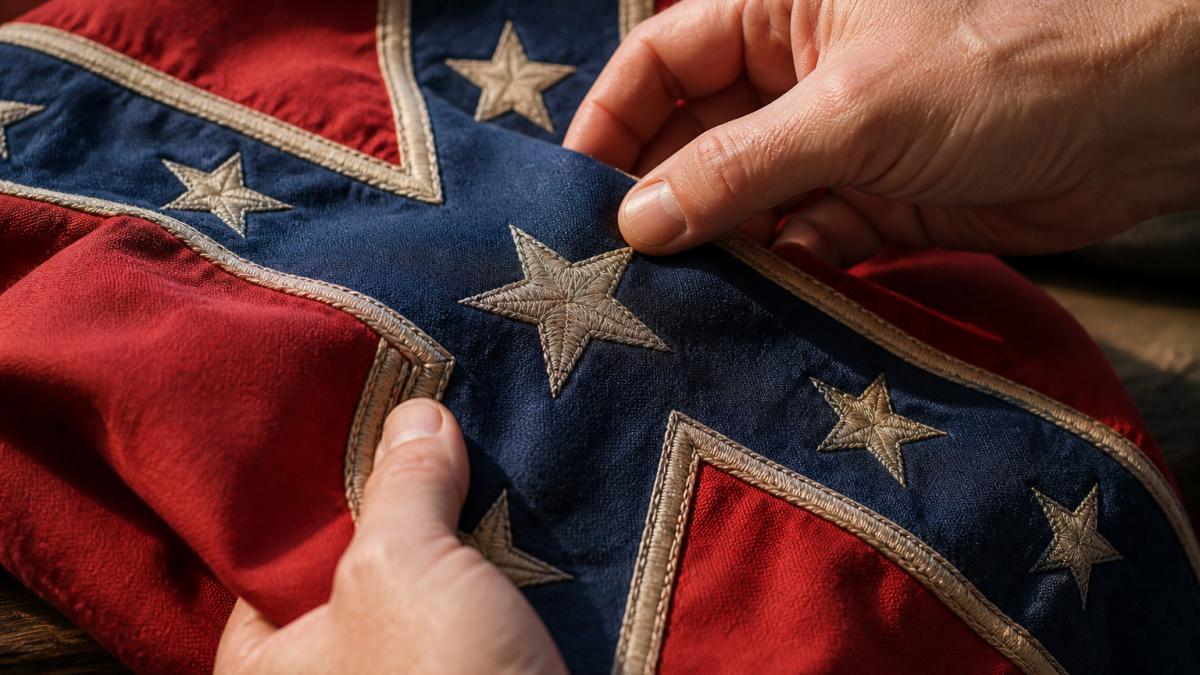
- Construction details. Reinforced stitching, colorfast embroidery thread, and durable fabric signal a maker expects the item to last decades, not seasons. The CSA Rebel Battle Flag Cotton 3' x 5' Sewn & Embroidered from Old Resaca Mercantile, for example, uses 100% durable cotton with reinforced edge stitching and embroidered details that resist unraveling.
- Finish quality. Edges should be clean, hems even, and closures smooth. Handmade means intentional and precise, not rustic or rough.
Why this matters for Southern heritage specifically

Southern heritage items carry meaning because they connect to specific places, families, and communities. A sweetgrass basket from Mount Pleasant is not interchangeable with one from anywhere else, and Edgefield stoneware reflects a kiln tradition going back to the early 1800s.
How to Evaluate Handmade Clothing and Heritage Apparel
Knowing what to look for separates informed buyers from those stuck with inferior items. Start with the seams: quality handmade apparel has straight, even seams with consistent stitch length.
Check fabric weight and feel. Genuine heritage apparel uses substantial, durable materials, cotton should have a natural texture, not a slick chemical coating. Thin or plasticky fabric is likely mass-produced.
Look at how the item is finished: clean edges, even hems, smooth closures. The Bonnie Blue Flag CSA Sewn & Embroidered Cotton Flag, for instance, features double-stitched hems and corrosion-resistant brass grommets, details showing a maker thinking about years of use, not weeks.

Ask about the maker's process. Legitimate artisans can describe their techniques, materials, and reasoning, why they chose cotton over synthetics, which thread types they use, how long items last. If a seller can't answer, that's a red flag.
Handmade vs Mass-Produced Apparel: Quality and Durability
Handmade apparel is built for longevity: artisans reinforce stress points, use quality materials, and finish seams properly because their reputation depends on the item lasting. Mass-produced items are engineered for a different timeline, manufacturers optimize cost per unit and expect regular replacement.
Durability compounds value. A handmade flag lasting 10 years costs less per year than a cheap reproduction lasting 1, making handmade items the economical choice, not the luxury they initially appear to be.
Aging differs too. Quality handmade items develop character, colors soften slightly but stay vibrant, and fabric becomes more supple. Mass-produced items fade unevenly, fray, and deteriorate.
Selecting Quality Southern Apparel for Your Collection
Building a quality southern apparel collection requires intentional choices. Define what matters to you, display, wearing, or historical significance, and prioritize accordingly.
Focus on makers with verifiable track records: how long they've been making items, customer satisfaction, and consistent production. These signals indicate someone serious about their craft.
Materials should be your primary filter. Look for 100% natural fibers, preferably cotton, for flags and textiles. Colorfast thread holds its appearance for decades while cheap thread fades within months. If you can't see reinforced construction, ask for detailed photos or specifications.
CSA Rebel Battle Flag Cotton 3' x 5' Sewn & Embroidered →
Price alignment is worth examining. Old Resaca Mercantile's pricing reflects quality: the CSA Rebel Battle Flag Cotton 3' x 5' Sewn & Embroidered at $54.95 includes embroidered details, reinforced stitching, and brass grommets that justify the investment.

Handmade Heritage Gifts: Supporting Artisans and Preserving Tradition
Purchasing handmade Southern heritage items supports artisans preserving traditional techniques in an era when mass production dominates, and several Southern techniques are genuinely at risk of disappearing.
Southern craft traditions that need buyers to survive
- Gullah/Geechee sweetgrass basketry. Lowcountry weavers in South Carolina and Georgia have coiled sweetgrass baskets for generations, but rising coastal land prices, limited sweetgrass access, and fewer young people entering the craft have put the tradition under pressure. Buying directly from weavers keeps it economically viable.
- Edgefield and Catawba Valley pottery. Alkaline-glazed stoneware requires specific clay, glaze chemistry, and wood-firing knowledge. A few studios still work in this tradition, and each sale supports the kiln time, materials, and apprenticeship keeping it alive.
- Appalachian quilting and hand-weaving. Quilting bees and hand-weaving studios in Appalachia and the Piedmont depend on local and heritage-minded buyers. Patterns pass down within families, and demand makes it worthwhile for the next generation to learn them.
- Hand embroidery and heritage textile work. Embroidered flags, samplers, and monogrammed linens require hours of skilled handwork. Choosing hand-embroidered over printed or machine-embroidered alternatives creates a market for the skill.
How your purchase actually sustains the tradition
Heritage artisans often learned their craft from family or mentors. Every purchase supports that continuity in three ways:
- It pays for time. Handwork takes hours; fair compensation lets a maker keep working instead of taking a different job.
- It funds materials. Sweetgrass, natural dyes, quality cotton, and traditional clay aren't free. Sales revenue keeps a maker stocked in the materials the tradition requires.
- It signals demand to the next generation. Young people decide whether to learn a craft partly based on whether adults earn a living from it. Visible demand changes that calculation.
Buying directly from makers
Local makers and home-based businesses like Old Resaca Mercantile source materials thoughtfully, maintain direct customer relationships, and invest in quality because their reputation depends on it. Buying from them keeps money in the community rather than flowing to distant corporate headquarters.
Cultural respect and responsible collecting
Some Southern craft traditions, particularly Gullah/Geechee basketry and certain Indigenous forms, carry cultural meaning belonging to specific communities. Responsible buying means:
- Preferring items made by members of the tradition over outside imitations.
- Asking about attribution and provenance, and expecting clear answers.
- Avoiding items copying sacred or community-specific designs without permission.
- Understanding that fair pricing is part of respect, underpaying culturally specific work devalues the tradition.
Why Fair Pricing and Authenticity Matter
Fair pricing and authenticity are directly linked. When makers receive fair compensation, they can afford quality materials and invest time in craftsmanship.
Fair pricing reflects the actual cost of handmade production: quality materials cost more than synthetics, hand stitching takes time, and embroidery requires skill.
Authenticity verification matters because the market includes reproductions and misrepresented items, sellers sometimes claim handmade when items are mass-produced.
According to consumer protection guidelines on product claims, sellers must accurately represent how items are made.
The 30-day return policy from Old Resaca Mercantile removes purchasing risk: if an item doesn't meet your expectations for quality or authenticity, you have recourse.
Choosing handmade southern heritage items means prioritizing authenticity, supporting artisans, and investing in pieces that last.
Frequently Asked Questions
How can you tell whether a handmade Southern heritage item is well made?
Look for reinforced stitching, quality materials like 100% cotton with colorfast thread, and attention to detail in embroidery work. Check for double-stitched hems, brass grommets that resist corrosion, and even stitching throughout. Authentic handmade items show signs of careful craftsmanship, inconsistencies in mass-produced goods are often signs of shortcuts, while minor variations in handmade pieces reflect individual artisan skill.
Are handmade heritage items more durable than mass-produced items?
Yes, handmade Southern heritage items typically last longer because makers use superior materials and construction methods. Handcrafted pieces feature reinforced seams, quality fabrics, and careful attention to detail that withstands years of use. Mass-produced alternatives often cut corners with cheaper materials and faster assembly, leading to premature wear. Items like embroidered cotton flags with proper stitching can endure outdoor conditions for multiple seasons when cared for appropriately.
What does buying handmade mean for the maker and the local community?
Purchasing handmade Southern heritage items directly supports artisan livelihoods and preserves traditional craftsmanship skills. Your purchase helps makers sustain their craft, pass generational knowledge to the next generation, and maintain cultural heritage practices. When you buy from local artisans or home-based businesses, you're investing in economic opportunity within your community and ensuring that ancestral traditions and regional identity continue to thrive rather than disappear.
What should you look for when buying Southern heritage apparel and items?
Prioritize authenticity, material quality, and maker reputation. Examine construction details like embroidery precision, fabric weight, and reinforced seams. Verify that sellers provide clear information about materials and craftsmanship methods. Choose makers who offer transparent returns policies and stand behind their work, Old Resaca Mercantile's 30-day risk-free returns and free shipping on flags reflect confidence in product quality and customer satisfaction.