

Quality Differences in Southern Heritage Flags: 2026 Guide
Table of Contents
- Understanding Quality Differences in Southern Heritage Flags
- Best Materials for Outdoor Flags: Polyester vs. Cotton vs. Nylon
- Manufacturing Standards That Determine Longevity
- Embroidered vs. Printed Flags: Which Lasts Longer
- How to Care for Southern Heritage Flags: Maintenance for Maximum Lifespan
- Identifying Authentic Quality: What Separates Premium Flags from Reproductions
- Retail Market Trends and Quality Standards in Heritage Flags
- Ceremonial vs. Daily Use: Choosing the Right Flag for Your Purpose
- Frequently Asked Questions
Last Updated: September 30, 2026
Understanding Quality Differences in Southern Heritage Flags
A quality southern heritage flag lasts longer because of specific manufacturing choices: material selection, stitching quality, and construction standards.
Best Materials for Outdoor Flags: Polyester vs. Cotton vs. Nylon
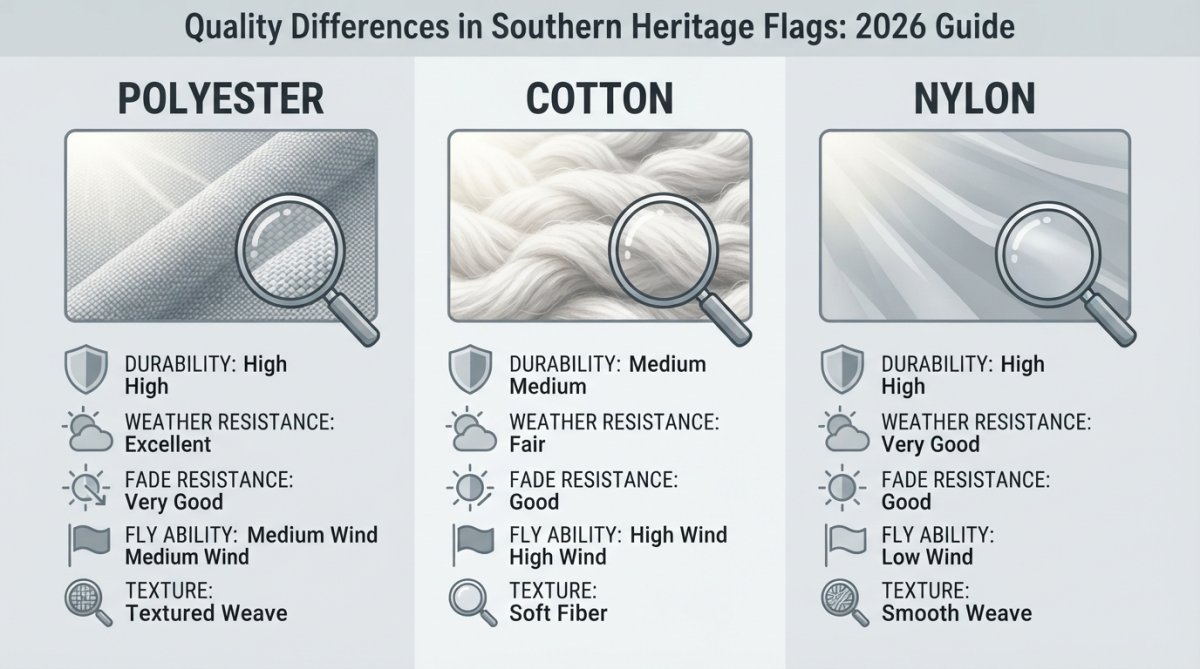
The material you choose fundamentally shapes how your flag performs over time. Each fabric type offers distinct advantages and trade-offs that affect durability, appearance, and maintenance requirements.
Polyester Construction and Weather Resistance
Polyester dominates the flag market because it resists UV fading, maintains color vibrancy, sheds water, and resists rot and mildew better than natural materials.
Polyester's tight weave prevents fraying, and its strength allows reinforced stitching to hold securely for years. Old Resaca's Confederate CSA Battle Flag uses durable polyester with brass grommets and reinforced stitching on the fly end for indoor and outdoor display.

Polyester feels less traditional than cotton, but for outdoor display, polyester delivers superior performance.
Cotton Weave and Traditional Appeal
Cotton offers historical authenticity and rich colors that appeal to collectors, though it requires more careful handling than synthetics.
Cotton absorbs moisture, fades within 18 months outdoors, and shows fiber breakdown in 3-5 years. Cotton works best for indoor display or seasonal use.
Nylon Durability and UV Protection
Nylon offers exceptional UV protection and is lighter than polyester, making it excellent for flags on tall poles where weight stresses grommets and stitching.
Nylon absorbs moisture and can develop mildew, and costs more than polyester. For UV protection and colorfastness, nylon delivers solid performance.
Manufacturing Standards That Determine Longevity
Manufacturing precision determines whether a flag lasts a decade or fails after two years. Understanding technical specifications empowers buyers to evaluate quality objectively.
Denier Weight and Fabric Density Specifications
Denier measures fiber weight and correlates to durability. Polyester flags range from 75D (promotional-grade) to 200D (commercial-grade).
Fabric density (threads per inch) determines durability. Tight weaves prevent fraying and shed water; loose weaves absorb moisture.
Double-Stitched Seams and Grommet Reinforcement
The fly end experiences the most stress. Reinforced stitching on the fly end distributes tension and prevents tearing under wind stress.
Brass grommets anchor flags without tearing fabric; plastic grommets crack under tension.
Objective Quality Grading: Commercial vs. Promotional Grade
The flag industry uses informal grading standards that separate durable, long-term investments from temporary displays. Understanding these categories helps you match purchase price to expected lifespan.
Promotional Grade flags (3-12 months use) use 75D-100D polyester with single stitching and minimal reinforcement. Cost: $15-$35. Fade within 18 months outdoors; seam failure within 2-3 years.
Commercial Grade flags (5-10+ years) use 150D-200D polyester with double-stitched seams and reinforced brass grommets. Cost: $40-$80. Maintain color and integrity through extended outdoor exposure.
Ask sellers to specify denier weight, thread count, stitching method, and grommet type.
Embroidered vs. Printed Flags: Which Lasts Longer
The design application method dramatically affects longevity: embroidered flags use thread stitched into fabric; printed flags apply dye or ink to the surface.
Embroidered designs are virtually permanent, the thread becomes part of the fabric and cannot fade. Embroidery costs more but lasts as long as the flag.
Confederate CSA Battle Flag 3' x 5' →
Printed designs fade within 2-3 years of outdoor display as ink breaks down under UV exposure. Most commercial flags use printing to reduce costs.
How to Care for Southern Heritage Flags: Maintenance for Maximum Lifespan
Proper care extends flag lifespan significantly. Different fabrics require different preservation strategies.
Fabric-Specific Cleaning and Storage Protocols
Polyester Flags: Dust indoor flags every 3-6 months. For outdoor flags, inspect monthly and clean with lukewarm water and mild soap using a soft cloth. Avoid high-pressure washing. Air-dry completely before storing in a cool, dry location (below 70°F, below 50% humidity) away from direct sunlight.
Cotton Flags: Cotton requires more careful handling. Never machine wash cotton flags. Hand wash only with cool water (below 80°F) and mild soap, using gentle motions to avoid fiber breakdown. Cotton absorbs moisture readily, so air-dry completely in a shaded location before storage. Never store cotton flags while damp, as moisture promotes mildew growth within 48-72 hours. Store in breathable cotton storage bags (not plastic, which traps moisture) in a cool, dry location. Inspect stored cotton flags every 3 months for signs of mildew or insect damage. Cotton flags should be stored indoors year-round; outdoor storage accelerates deterioration. Consider storing cotton flags with acid-free tissue paper to prevent creasing and with cedar blocks or lavender sachets to deter insects.
Nylon Flags: Nylon occupies a middle ground. Clean with lukewarm water and mild soap using a soft cloth, similar to polyester. Nylon is more susceptible to mildew than polyester, so ensure complete air-drying before storage. Store in a cool, dry location with good air circulation. Avoid storing nylon in sealed plastic bags, which can trap residual moisture.
Seasonal Display and Rotation Schedules
Flags displayed year-round experience cumulative UV and weather stress. Rotating flags seasonally extends lifespan significantly. If you own multiple flags, display each flag for 3-4 months, then rotate to storage. This approach reduces total UV exposure per flag by 50-75% compared to continuous display.
For flags that must remain displayed continuously, establish a maintenance schedule:
- Monthly: Inspect for visible damage, debris, or discoloration. Remove debris with soft brush or compressed air.
- Quarterly (every 3 months): Deep inspection of seams, grommets, and fabric for early signs of deterioration. Check for fraying, color fading, or grommet corrosion.
- Semi-annually (every 6 months): Clean the flag if outdoor display. Check grommet integrity and seam security.
- Annually: Assess overall condition and colorfastness. Consider rotating to storage if fading becomes noticeable.
UV Protection and Colorfastness Over Time
UV exposure is the primary enemy of flag longevity. Polyester resists UV degradation better than cotton, but all fabrics fade eventually when exposed to direct sunlight. Positioning your flag strategically extends color vibrancy: north-facing poles receive less intense midday sun; east-facing poles receive morning sun (less damaging than afternoon); west-facing poles receive intense afternoon sun (most damaging).
Grommet and Seam Inspection Protocol
Grommets corrode over time, especially in coastal or humid environments. Inspect brass grommets monthly for green or white corrosion (verdigris). Light corrosion can be cleaned with a soft cloth; heavy corrosion indicates the grommet may fail soon.
Storage Environment and Pest Prevention
Flags stored for extended periods require climate control. Ideal storage conditions are 60-70°F and 30-50% humidity. Avoid basements (high moisture), attics (temperature fluctuations), or garages (temperature extremes and humidity). A climate-controlled closet or interior room is ideal.
Identifying Authentic Quality: What Separates Premium Flags from Reproductions
Distinguishing genuine quality from cheap reproductions requires examining specific details before purchase.
Retail Market Trends and Quality Standards in Heritage Flags
The market for southern heritage flags reflects broader consumer interest in historical preservation and regional identity. Retailers increasingly differentiate themselves through quality standards and manufacturing transparency.
Ceremonial vs. Daily Use: Choosing the Right Flag for Your Purpose
Your intended use should guide material selection.
Flags intended for year-round outdoor display require polyester. The weather resistance, UV protection, and colorfastness of this synthetic material.
Frequently Asked Questions
What are the primary material differences between indoor and outdoor southern heritage flags?
Outdoor southern heritage flags typically use polyester or nylon for superior weather resistance, UV protection, and colorfastness. Polyester resists fading and tearing, while nylon offers exceptional durability in harsh conditions. Cotton weave flags work better indoors, as they're prone to UV degradation and moisture damage outdoors. The best materials for outdoor flags include high-denier polyester blends and commercial-grade nylon with reinforced stitching and brass grommets for extended lifespan.
How does stitching quality affect the lifespan of a Confederate-themed flag?
Double-stitched seams and reinforced stitching on the fly end significantly extend flag longevity by preventing fraying and structural failure. Quality flags feature brass grommet reinforcement at stress points where the flag attaches to poles. Poor stitching leads to seam separation, especially in outdoor exposure where wind stress is constant. Commercial-grade flags with hem stitching and reinforced corners outlast cheaply reproduced flags by years, making construction standards a critical quality indicator.
What's the difference between printed and embroidered southern heritage flags?
Embroidered flags feature thread-stitched designs that integrate directly into the fabric, offering superior durability and colorfastness over time. Printed flags use dyes or ink applied to the surface, which fade faster under UV exposure and weather conditions. Embroidered flags cost more initially but maintain vibrant colors and design integrity for decades. For outdoor display and long-term collection value, embroidered southern heritage flags outperform printed alternatives significantly, especially in high-sun environments.
Why do some flags fade faster than others when displayed outdoors?
UV degradation is the primary cause of flag fading. Lower-quality polyester lacks UV inhibitors in its dye composition, causing rapid colorfastness loss. Fabric density and denier specifications matter, thin, low-denier fabrics deteriorate faster than commercial-grade materials. Printed designs fade quicker than embroidered ones. Geographic factors like intense Southern sun, humidity, and salt air accelerate degradation. Quality flags use solution-dyed polyester with UV stabilizers, maintaining color vibrancy for years despite outdoor exposure.
How can you tell if a southern heritage flag is made for long-term display?
Look for brass grommets (not plastic), double-stitched seams along the fly end, and reinforced hem stitching. Check the material, commercial-grade polyester or nylon indicates durability. Ask about fabric denier and whether UV inhibitors are included in the dye. Quality manufacturers provide specifications on colorfastness ratings and weather resistance. Authentic heritage flags designed for lasting display include details like reinforced stitching at stress points and come with care instructions for maintenance.
What should collectors look for when purchasing southern heritage flags?
Prioritize manufacturing standards: brass grommets, double-stitched construction, and reinforced fly-end stitching. Verify the material, polyester or nylon for outdoor durability, cotton for indoor display. Check colorfastness ratings and ask about UV protection. Review return policies and authenticity guarantees. Reputable sellers provide detailed specifications on fabric density and construction methods. For collectors concerned about quality and craftsmanship, requesting manufacturing details and comparing against commercial-grade standards ensures you're purchasing authentic, durable items rather than cheap reproductions.