

Authentic Confederate Memorabilia for Sale Online
Table of Contents
- What Makes Confederate Memorabilia Authentic
- How to Spot Fake Civil War Artifacts Before You Buy
- Types of Authentic Confederate Memorabilia for Sale Online
- Collecting Southern Heritage Memorabilia: A Beginner's Path
- Best Practices for Preserving Historical Memorabilia
- Where to Buy Authentic Confederate Memorabilia Online Safely
- Frequently Asked Questions
Last Updated: September 29, 2026
What Makes Confederate Memorabilia Authentic
Authentic Confederate memorabilia is original material produced during or shortly after the Civil War era (1861-1865), distinguished by period-correct materials, documented wear, and verifiable provenance.
The market for Civil War artifacts has grown steadily as collectors seek tangible connections to Southern history. But growth brings fakes. Below, we'll show you exactly what separates genuine pieces from modern copies, so you can buy with confidence.
Materials, Wear Patterns, and Maker Marks
Period materials tell the first part of the story. Confederate items used specific fabrics, metals, and inks that differ from modern equivalents. A genuine 1860s flag uses hand-woven cotton or wool with irregular weave. Modern copies use uniform machine-woven fabric.
Wear patterns matter just as much. Real artifacts show age in predictable ways:
- Fabric fades unevenly based on how it was folded and stored
- Metal develops patina that can't be faked convincingly
- Paper yellows and becomes brittle in specific patterns
- Ink fades from the edges inward on handwritten documents
Maker marks provide the third check. Many period items carry stamps, signatures, or manufacturer details that historians have catalogued. If a mark doesn't match known records, treat it as a red flag.
Paperwork and Provenance That Hold Up
Provenance is the documented history of an item's ownership. Strong provenance includes:
- Letters of authenticity from recognized dealers or historians
- Auction records showing previous sales
- Family documentation connecting the item to a specific ancestor
- Photographs showing the item in period context
Weak provenance is vague. "From a private collection" means nothing without names and dates. A common mistake is accepting a typed letter as proof. Real documentation from the 1800s uses period paper, ink, and handwriting.
How to Spot Fake Civil War Artifacts Before You Buy
Spotting fake Civil War artifacts requires checking materials, construction methods, and documentation against known period standards. Most fakes fail on at least one of these checks. The challenge is knowing what to look for before money changes hands.
Red Flags in Online Listings
Online buying adds distance between you and the item. That distance helps sellers hide problems. Watch for these warning signs:
- Blurry photos that don't show details like stitching, stamps, or edges
- Prices far below market for comparable items
- Sellers who won't provide additional photos on request
- Listings that use emotional language instead of factual descriptions
- No return policy or unclear terms
- Stock photos instead of actual item photos
A seller who won't answer basic questions about an item's history is hiding something. Legitimate sellers welcome scrutiny because they know their items will pass inspection.
The Smithsonian Institution's guide to caring for artifacts offers useful context on how museums evaluate historical items. Their standards give you a benchmark for what serious documentation looks like.
Types of Authentic Confederate Memorabilia for Sale Online
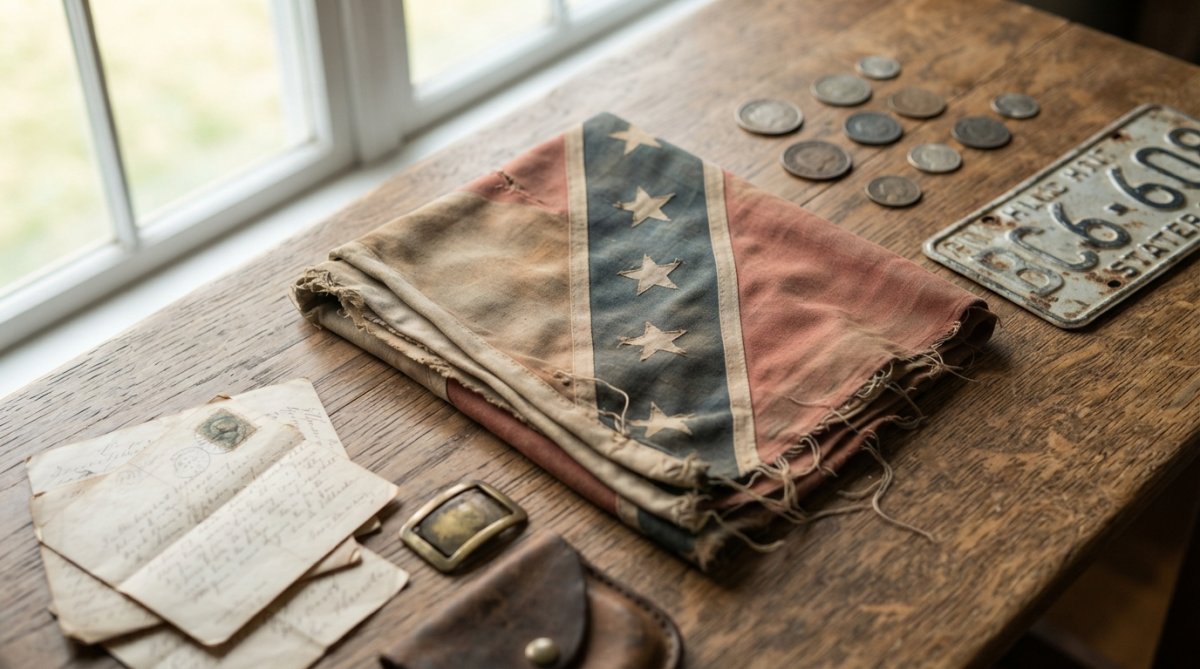
Authentic Confederate memorabilia falls into three main categories: flags and banners, coins and documents, and accessories like license plates and tags. Each type has its own authentication challenges and price points. Knowing the differences helps you focus your collection.
Flags and Banners
Flags are the most collected category. Original Civil War flags rarely survive in good condition because they were made of natural fibers that degrade over time. Most authentic pieces from the 1860s show significant wear.
Reproductions from the early 1900s are also considered collectible. These "vintage reproductions" were made during reunions and memorial events. They're more affordable than originals and carry their own historical value.
| Type | Era | Typical Condition | Authentication Focus |
|---|---|---|---|
| Original Civil War | 1861-1865 | Fragile, faded | Fabric weave, thread type |
| Early reproductions | 1890-1920 | Good to fair | Manufacturing marks, dye type |
| Mid-century items | 1950-1970 | Excellent | Printing method, material |
Coins, Currency, and Documents
Confederate currency and coins are widely collected. The Confederate States of America issued paper currency from 1861 to 1864. Genuine notes have specific engraving details that counterfeiters struggle to replicate.
Documents include military orders, letters, and official papers. Handwriting analysis and paper dating can confirm authenticity. The Library of Congress Civil War collection maintains digitized records that help collectors compare their items against known examples.
License Plates, Tags, and Accessories
Vintage license plates and tags from Southern states carry historical significance. Early plates from the 1910s through the 1950s are collectible, especially those with Confederate imagery or Southern themes.
Modern heritage items continue this tradition. Old Resaca offers a range of flags, license plates, and accessories that celebrate Southern culture.
Collecting Southern Heritage Memorabilia: A Beginner's Path
Start with a focus. Collectors who try to buy everything end up with a random assortment that lacks coherence. Pick one category, learn it deeply, then expand.
The beginner's path looks like this:
- Choose your category (flags, documents, or accessories)
- Study reference materials and museum collections
- Buy low-cost items first to practice authentication
- Build relationships with established dealers
- Document everything you purchase
Budget matters. Entry-level authentic items exist, but rare pieces command high prices. Set a spending limit and stick to it. The American Alliance of Museums provides resources on ethical collecting practices that apply to private collectors.
Best Practices for Preserving Historical Memorabilia
Preservation determines whether your collection survives for future generations. Poor storage destroys items faster than age alone. The right environment slows deterioration dramatically.
Storage, Light, and Handling
Control three factors: light, humidity, and temperature. Ultraviolet light fades fabrics and paper. Keep items out of direct sunlight and use UV-filtering glass for framed pieces.
Humidity should stay between 35% and 55%. Too dry causes brittleness. Too damp encourages mold. A simple hygrometer monitors levels.
Handling rules:
- Wash hands before touching items (oils damage surfaces)
- Use cotton gloves for metal and paper
- Support flags and textiles from underneath
- Never fold items along existing creases
Store flat when possible. If you must fold, pad the creases with acid-free tissue.
Where to Buy Authentic Confederate Memorabilia Online Safely
Buying authentic Confederate memorabilia for sale online safely means choosing sellers with clear return policies, detailed photos, and responsive communication. Old Resaca provides free shipping on flags and tags, plus a 30-day return policy that removes the risk from your purchase.
Look for these seller qualities:
- Detailed item descriptions with measurements
- Multiple high-resolution photos
- Clear authentication claims with supporting evidence
- Responsive customer service
- Written return policy
For modern heritage items, Old Resaca offers a straightforward shopping experience. As a home-based business, we focus on quality items and personal service. Our eBay store carries the full selection.
Frequently Asked Questions
How can you tell if Confederate memorabilia is authentic?
Authentic Confederate memorabilia shows consistent aging, correct materials for the period, and wear patterns that match how the item was used. Look for period-correct stitching on flags, hand-signed documents with matching ink, and coins with natural patina. Reproductions often have uniform coloring, modern materials, or crisp edges that don't match the claimed age. Ask sellers for provenance details and high-resolution photos of maker marks, seams, and any labels before buying.
What are the most sought-after Confederate artifacts for collectors?
Battle flags with unit markings, original Confederate currency and coins, soldier letters and diaries, and period photographs are among the most sought-after items. Items tied to specific units, battles, or named soldiers carry the strongest collector interest. Documents with clear provenance, such as letters mentioning a battle or a signed pass, often draw the most attention at shows and online. Condition matters greatly: items with original fabric, ink, and hardware hold value better than heavily restored pieces.
How do I verify the provenance of historical memorabilia?
Start with any paperwork the seller provides: old receipts, auction records, family letters, or museum tags. Cross-check names, dates, and unit references against public records and published regimental histories. Ask the seller directly where the item came from and whether they'll share prior owner information. For higher-value pieces, a written authentication from a recognized appraiser or auction house adds confidence. If a seller can't explain the item's history or avoids questions, treat that as a warning sign.
What should a beginner collector look for in Southern heritage items?
Beginners should focus on condition, clear photos, and a seller who answers questions directly. Start with lower-cost items like reproduction flags, license plates, or modern commemorative coins to learn the market before spending more. Read descriptions carefully, compare listings across multiple sellers, and avoid any item that only has one blurry photo. Building a small reference library of books on Civil War artifacts helps you recognize correct materials, markings, and aging patterns over time.
Building a collection of authentic Confederate memorabilia takes patience and careful study. The rewards come from connecting with history in a tangible way. Old Resaca supports collectors with Southern heritage items, free shipping on flags and tags, and a 30-day return policy. Visit our eBay store to browse current offerings and start your collection with confidence.